
Van Buren Directory Collections
Van Buren city directory work begins by separating unlike collections. The earliest verified printed source is an Arkansas-wide gazetteer with a short Van Buren section. It lists firms, trades, officers, and named workers, but the inspected pages do not form a household roll. The later criss-cross run is address first and covers a multi-city area. Newspapers, maps, deed books, church sessions, and census schedules are companion sources rather than substitutes for the directory itself.
| Collection | Years | Where Held | Access |
|---|---|---|---|
| Polk Arkansas State Gazetteer and Business Directory | 1888-89 | Arkansas Archives MG-1476; Arkansas Genealogical Society transcription | Microfilm or online PDF |
| Fort Smith-Van Buren-Barling criss-cross directories | 1955; 1966-1996 | Library of Congress address-directory collection | Request by place, year, and directory type |
| Van Buren Press | 1859-1914, with an 1862-66 suspension | Library of Congress | 1,399 digitized items |
| Sanborn fire-insurance maps | 1886, 1892, 1897, 1904, 1909, 1914 | Library of Congress | Free digital images |
| Federal census schedules | Public through 1950 | Van Buren Library databases | Library-only or card access varies by database |
This coverage table also shows the gaps. No complete annual residential run has been verified. The exact shelf publishers and last local print year still require a librarian check. A claim that someone was absent from Van Buren is therefore much stronger when it survives checks in the city directory, census, newspaper, and deed sources for the same period.
Van Buren's Polk Gazetteer
The 1888-89 source is Polk's Arkansas State Gazetteer and Business Directory, volume II, pages 622-626. Its Van Buren introduction describes a river and rail junction, churches, schools, banks, mills, a cannery, an opera house, and newspapers. Those statements are period claims, not modern census facts. The entries then identify people through trades and public roles: druggist, hotel proprietor, county clerk, surveyor, newspaper editor, and company officers are among the inspected forms.
This quirk matters. A later Polk city directory may include a spouse, house address, widow note, or owner mark. The Van Buren sample did not verify any of those residential fields. It cannot answer who occupied a certain house. Search initials, full given names, firm names, and office titles because an entry may be as short as a surname and occupation or as full as a company followed by its officers.
Collection distinction. Treat the 1888-89 Polk item as a business gazetteer, not as proof of a person's home address or household.
Reading Van Buren Directory Entries
A careful Van Buren city directory reading starts with the source's own key. The Polk transcription and the later address directories use different systems. For Polk, copy the entry exactly, including initials, office title, firm name, and punctuation. For the twentieth-century criss-cross volumes, first confirm that the page belongs to the Van Buren part of the combined Fort Smith-Van Buren-Barling title.
| Personal form | Surname, initials or given name, followed by an occupation or business. |
|---|---|
| Institutional form | Company name with president, treasurer, manager, or another officer. |
| Proprietor form | Establishment joined to the person who operates it. |
| Government form | Person identified through a public office title. |
| Criss-cross form | Street and house number leading to the listed occupant for that issue. |
Do not add fields that the page does not print. A trade can help distinguish two same-named people, while a firm can lead to advertisements and legal notices. An address in a criss-cross issue is dated evidence, not proof of a full household or year-round stay.
- Criss-cross directory
- An address-first list that lets a street and house number lead to the person or listing printed there.
- Householder index
- A directory section organized around the named person associated with a household, when the publisher actually provides one.
- Abbreviation key
- The publisher's legend for shortened words and symbols. Save it before interpreting any mark.
Van Buren Criss-Cross Years
The verified address-first run is 1955 and 1966 through 1996. It appears in the Library of Congress collection under Fort Smith, Van Buren, and Barling. A useful request states the place, state, year, and “Street Address/Criss-Cross” type. That wording keeps the request separate from an ordinary phone or business directory search. Exact publisher details were not visible in the inspected inventory.
The Library of Congress criss-cross guide shows how these address directories are organized.
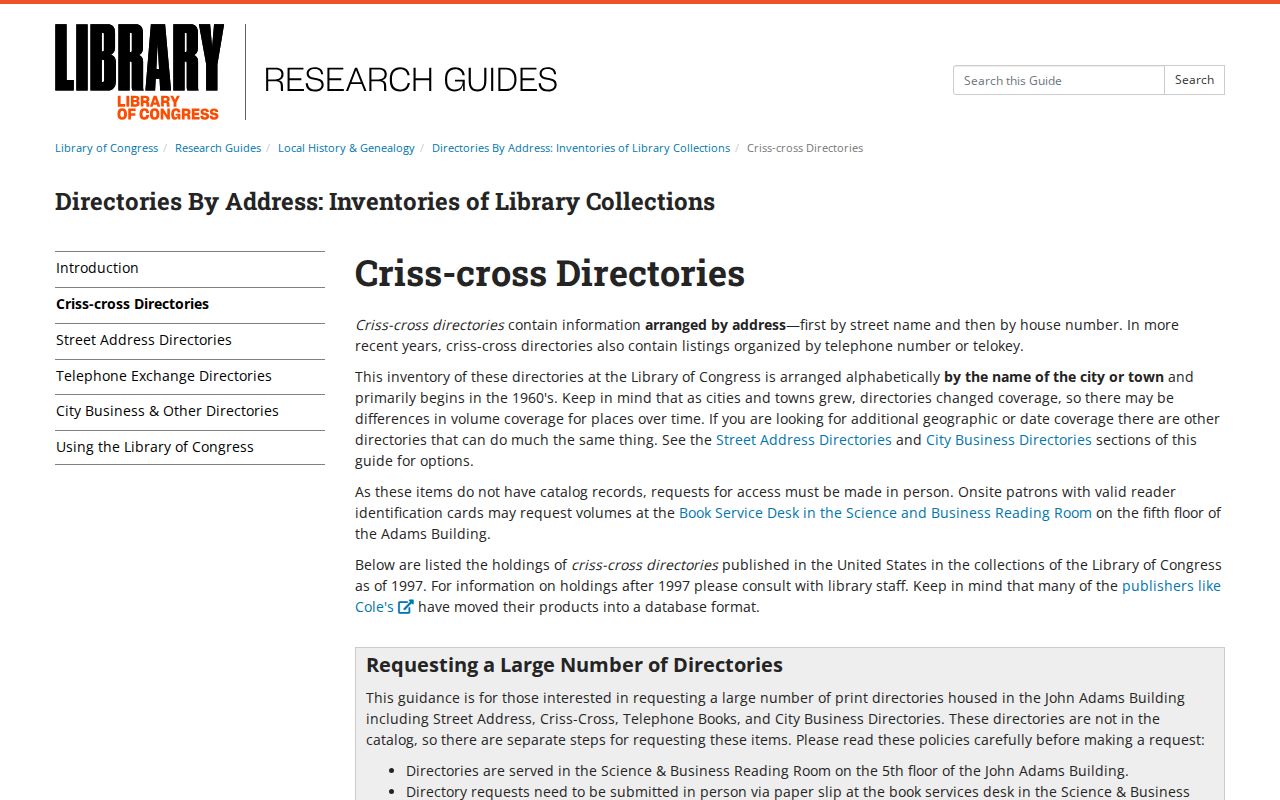
The capture points to the correct address-first collection for checking a Van Buren street in a known year. Once an occupant spelling is found, check the prior and next available volumes to bracket a move. Then compare the name with a deed, obituary, or census record instead of treating one printed line as a complete residence history.
Van Buren Library Directory Desk
The Van Buren Library Genealogy Room at 1409 Main has source books, digital archives, DVDs, microfilm, and a microfilm reader. Its schedule is Monday, Wednesday, and Friday from 8:30 a.m. to 5 p.m.; Tuesday and Thursday to 6 p.m.; and Saturday from 10 a.m. to 2 p.m. The branch is closed Sunday. Calling 479-474-6045 before a long visit can settle which local city directory or microfilm title is ready to use.
The library provides Ancestry Library Edition only inside the library. HeritageQuest is available from home with a card and includes census records, books, PERSI, Freedmen's Bank, Revolutionary War, and Serial Set material. African American Heritage is available statewide through Traveler. Each access rule matters when planning a Van Buren directory search.
The Van Buren branch page gives the current contact and service point.
The branch capture anchors the on-site fallback for material that cannot be opened from home. Staff can also help distinguish a shelf title from a licensed database result.
Note: Friends of Genealogy meets at the library on the third Tuesday of each month at 3 p.m.
Van Buren Directory Gap Fillers
The digitized Van Buren Press covers July 1859 through July 1914, apart from its January 1862 to February 1866 suspension. Search a name in obituaries, marriage notices, advertisements, legal notices, and social columns. Always save the issue date and page. The Van Buren Weekly Argus and Press-Argus title changes also mean a missed search may reflect a title or issue gap rather than a missing person.
Van Buren Sanborn maps add the place layer. Editions grew from two sheets in 1886 to four in 1892, six in 1897, nine in 1904, ten in 1909, and twelve in 1914. That rise measures mapped growth, not population. Sanborn symbols show footprints, uses, materials, streets, and outbuildings, but not residents. Pair a named source with the map.
A rare survival strengthens the newspaper trail. The Press office burned in 1892, yet editor J. S. Dunham had kept copies at home. Those copies helped preserve the run despite the fire. The story is a sound reminder that local records may survive outside the office that created them.
Van Buren Genealogy Companions
The Crawford County Genealogical Society in Alma opens Tuesday and Thursday from 9 a.m. to 3 p.m., or by appointment, and can be reached at 479-997-8559. Its Panning for Nuggets of Old volumes contain indexed family and local studies. FamilySearch lists digitized volumes through 1999 and a series beginning in 1980, subject to its current access rules.
The society contact page provides another human route when a Van Buren city directory trail reaches a surname, church, cemetery, or family file.
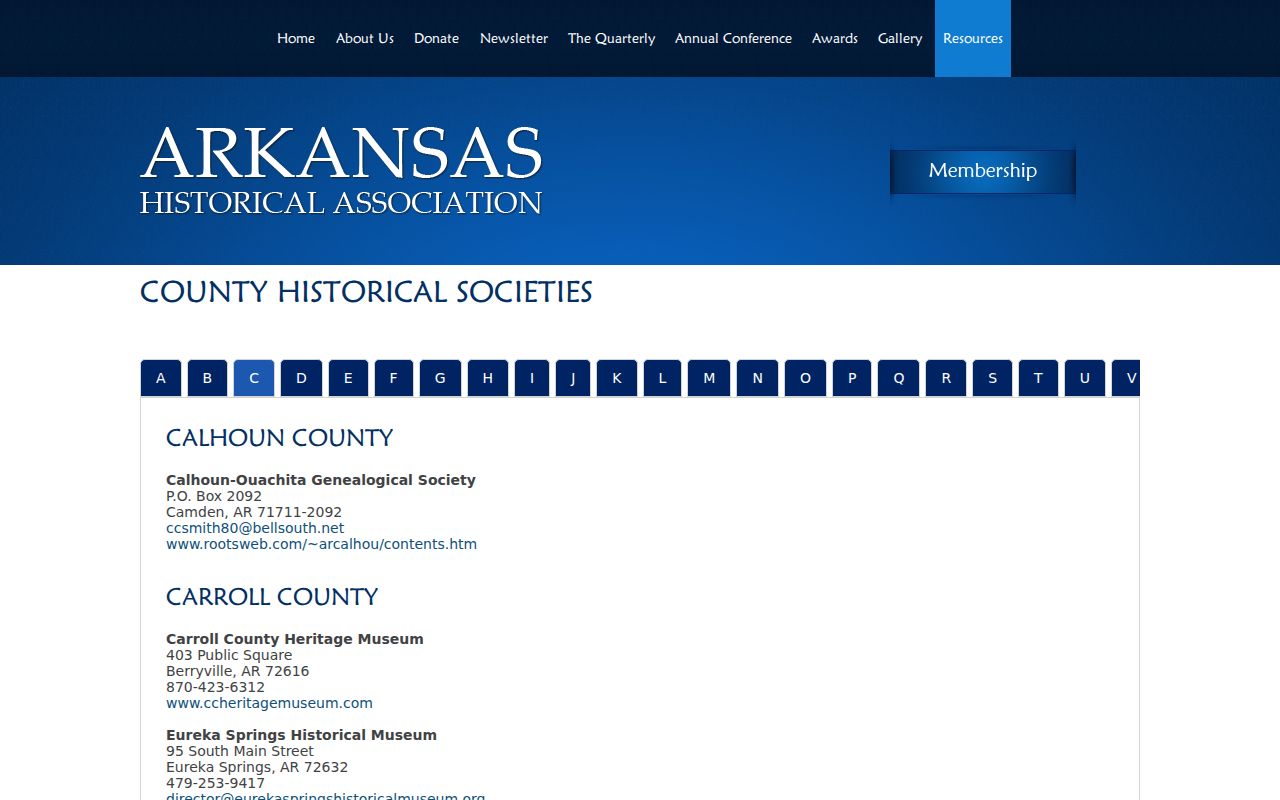
The captured society listing is most useful after collecting names, dates, and variant spellings. A focused request is easier to match against an indexed article or vertical file.
Church sessions can also fill a gap. Dripping Springs Cumberland Presbyterian records cover 1867-1953 on FamilySearch microfilm, though the catalog warns that some images may be faded or soiled. Naturalization files for 1896-1910 and Circuit Court indexes from 1877 add other named evidence without becoming city directories themselves.
Trace Van Buren Directory Families
A family trail works best when each source keeps its proper role. The 1888-89 Polk list can identify a worker, proprietor, officer, or firm near the lost 1890 federal census. The 1880 and 1900 census schedules can then test age, family, and residence. Later criss-cross issues answer address-first questions, while deeds follow owners and newspapers record life events.
- Copy the first city directory entry exactly, including initials, occupation, firm, address, and issue year where those fields appear.
- Search nearby issues in the same collection. Record the first appearance, last appearance, spelling changes, and any move.
- Pair the 1888-89 Polk entry with the 1880 and 1900 census. Pair later address listings with the nearest public census through 1950.
- Use newspaper notices and obituaries to connect relatives, firms, former addresses, and a possible date of departure.
- Test an owner's trail in deed records, but keep ownership separate from occupancy. Use Sanborn only for the building and street context.
Disappearance has several possible causes: a move, death, name change, omission, or change in the publisher's canvass. It is not an answer by itself. The Civil War also broke courthouse continuity. Union forces captured Van Buren in 1862 and destroyed courthouse records and a printing office, so pre-1877 claims need source-by-source care. FamilySearch deed and court indexes beginning in 1877 mark the visible postwar reconstruction boundary.
For a present-day name that emerges from the historical trail, the Van Buren resident lookup explains how to test a modern official index without turning a past directory entry into a claim about current residence.